
Introduction
The Opportunity and the Risks
Industry Analysis – Indian Women’s Ethnic Wear & Apparel Retail
India’s overall apparel market is estimated at over ₹7–8 lakh crore, with women’s wear accounting for roughly 35–40% of the total market. Within this, women’s ethnic wear is the single largest category, estimated at ₹1.5–2 lakh crore and growing at a mid-to-high single-digit CAGR. The segment includes kurtis, salwar suits, sarees, fusion wear and occasion-led apparel, with demand spread across both urban and semi-urban markets.
Unlike Western fashion, ethnic wear benefits from structural demand drivers. Weddings, festivals and cultural events create recurring consumption cycles, while everyday office and casual wear provide a steady baseline demand.
The market, however, remains highly fragmented. A significant share is still controlled by unorganised players such as local boutiques and independent retailers. Organised branded retail accounts for a minority share but continues to gain ground due to better supply chains, standardised pricing, improved store formats and increasing brand consciousness among consumers.
From a financial perspective, organised ethnic wear retailers typically operate with gross margins in the 45–60% range, depending on design differentiation and sourcing efficiencies. However, the business is working-capital intensive. Inventory turnover, discounting discipline and store productivity are critical drivers of EBITDA margins, which generally range between 8–15% for scalable players.
Overall, the Indian women’s ethnic wear segment offers a long growth runway supported by formalisation, premiumization and demographic tailwinds. However, profitability in this sector is highly execution-dependent.
Business Model
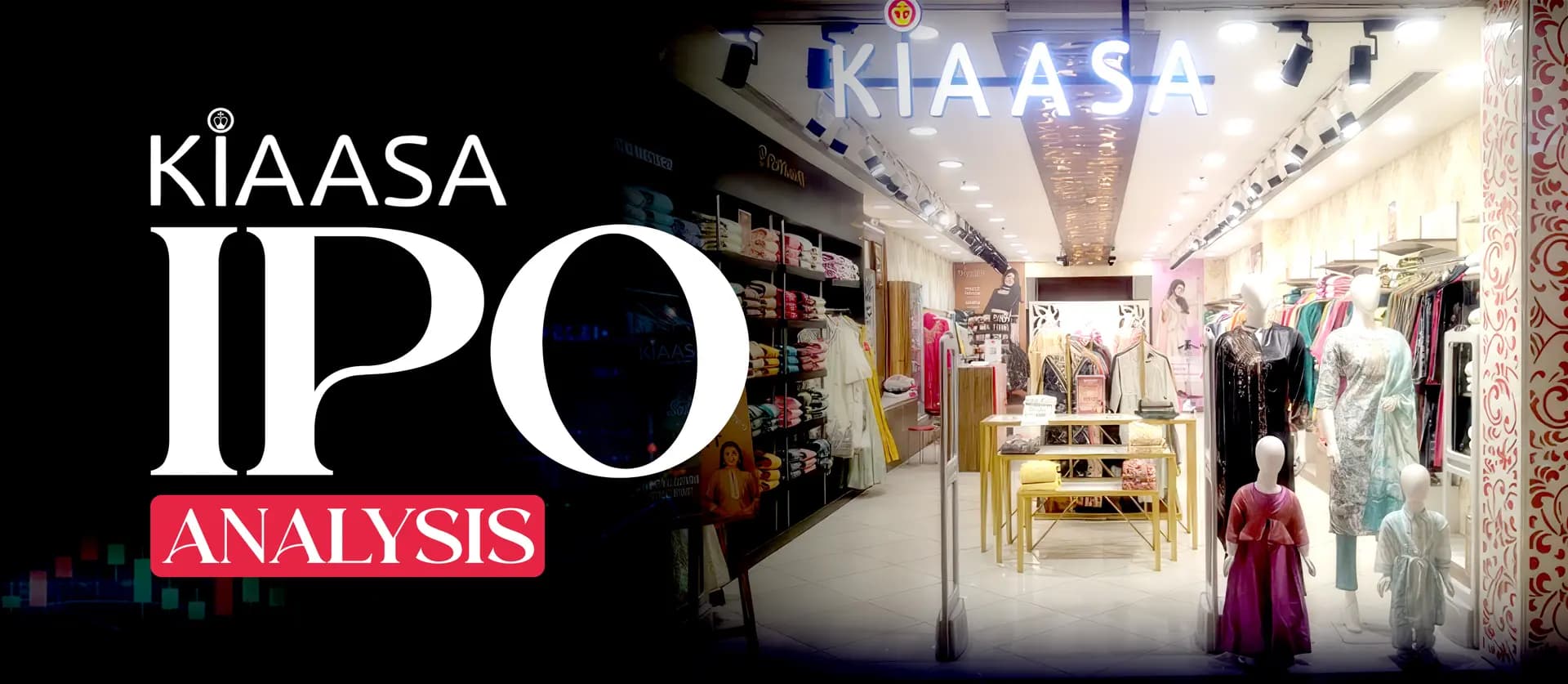
Kiaasa Retail operates as a design-led, asset-light women’s ethnic wear retailer, retaining in-house control over design, merchandising and store execution while outsourcing manufacturing to third-party vendors. This model avoids plant capex but shifts profitability dependence to sourcing efficiency, sell-through rates and discount discipline, with organised ethnic wear players typically operating at 45–60% gross margins.
Revenue is generated through 100+ exclusive brand outlets across ~70 cities, with revenue scaling from ₹26.33 crore (FY22) to ₹107.66 crore (11M FY25). EBITDA margins improved from 7.9% to 12.5%, reflecting operating leverage as stores matured. Industry-level EBITDA for scalable ethnic retailers typically ranges between 8–15%, placing Kiaasa within the sector band.
However, growth is inventory-funded. Inventory increased from ₹15.53 crore (FY22) to ₹71.95 crore (11M FY25), with inventory turnover moderating to ~1x (279 days) versus industry norms of 3–5x, highlighting capital intensity. While fixed asset requirements remain modest, expansion requires proportional working capital deployment, making cash flow conversion, inventory turns, and same-store sales growth critical to sustaining return ratios.
Kiaasa Retail derives its revenue primarily from the sale of women’s ethnic wear through company-operated retail stores. The revenue mix is product-driven rather than project-driven, with assortment planning playing a central role in topline stability and margin control.
** Includes Nightwear, Kids Wear, Girls Wear, Jumpsuit, Handbags, Crop Top, Shawl/Stole, Footwear, Drape Wear, Unstitched
Store Network and Expansion Visibility
As of February 2025, Kiaasa operates around 113 Exclusive Brand Outlets (EBOs) across approximately 70 cities in India. The store footprint spans Tier 1, Tier 2 and Tier 3 markets, with Uttar Pradesh emerging as the largest contributing state, accounting for roughly 29% of revenue in 11M FY25.
The company follows a cluster-based expansion strategy, focusing on high-footfall high streets and regional malls. Average store size ranges between 500 and 1,500 square feet, enabling standardised rollout and relatively moderate per-store capex compared to large format apparel retailers.
Unlike EPC players that rely on project pipelines, Kiaasa’s revenue visibility is driven by:
• Existing mature store base
• Same-store sales growth
• New store additions
• Seasonal festive launches
Revenue has scaled from ₹26.33 crore in FY22 to ₹107.66 crore in 11M FY25, reflecting rapid network expansion and improving store productivity.
Key Business Strategies
Manufacturing & Vendor Network
Kiaasa follows an outsourced production model. Garment manufacturing is undertaken through third-party vendors rather than owned factories. This:
• Reduces fixed asset intensity
• Keeps capital expenditure moderate
• Allows flexible scaling of production volumes
However, this also means dependence on vendor reliability, quality control and timely inventory delivery.
Mr Om Prakash – Promoter, Chairman & Managing Director
Mr Om Prakash holds a Post Graduate Diploma in Business Management from Master School of Management, Meerut, a degree in Information Technology from St. Xavier College, Ranchi, and an off-campus e-commerce technocrat certification from IIT Kharagpur. With over two decades of experience in retail, distribution, sales, and e-commerce, he has led Kiaasa’s strategic expansion and brand positioning. His leadership has been instrumental in scaling the company from inception to a 100+ store retail network.
Mr Amit Chauhan – Promoter & Whole-Time Director
Mr Amit Chauhan holds a Diploma in Business Management (Marketing) from the Institute of Management, Commerce & Vocational Education, Meerut. With over 21 years of experience in the retail and fashion industry, he brings strong operational and strategic execution capabilities to the business. He has played a key role in shaping Kiaasa’s brand identity, store expansion, and overall growth trajectory.
Shareholding Structure (Pre-Issue – As per DRHP)
Promoters
Promoter Group
Shares: 91,52,500
Holding: 71.84%
Financial Analysis (₹ in Crores)
Kiaasa operates in an inventory-heavy retail model. Inventory has increased from ₹15.53 crore in FY22 to ₹71.95 crore in 11M FY25, reflecting store expansion and deeper SKU stocking. Inventory days have expanded meaningfully in FY24–FY25, indicating slower rotation and higher capital lock-in.
Unlike EPC businesses, receivable risk is limited as sales are largely cash and card-based. The working capital risk here is inventory-led, not credit-led.
The company follows an outsourced manufacturing model with limited fixed asset intensity. However, retail scalability requires upfront stocking for new stores and seasonal launches. Capital efficiency, therefore, depends on inventory turnover rather than asset utilisation.
Operating cash flow has been inconsistent:
• FY22: (₹12.73 crore)
• FY23: (₹3.23 crore)
• FY24: +₹10.84 crore
• 11M FY25: (₹9.00 crore)
Despite margin expansion, cash generation has fluctuated due to working capital expansion. Financing inflows in FY25 suggest reliance on external funding during growth.
Revenue scaled from ₹26.33 crore in FY22 to ₹107.66 crore in 11M FY25. EBITDA margin improved from 7.9% to 12.5%. RoNW stands at 18.6%, normalising as equity expanded.
The business is execution-driven, with margins dependent on inventory discipline and store productivity rather than structural entry barriers.
Peer Comparison (FY25)
Sector Specific Ratios:
*SSSG refers to same-store sales growth
IPO Objectives
Kiaasa Retail is undertaking a 100% fresh issue of 55,00,000 equity shares. The proceeds from the issue are intended to strengthen the balance sheet and support expansion.
A significant portion of the proceeds will be deployed towards working capital. Given the inventory-heavy nature of the business, incremental capital will primarily support:
• Procurement of inventory for new and existing stores
• Seasonal stock build-up ahead of festive demand
• Vendor payments and operational liquidity
As inventory has scaled from ₹15.53 crore in FY22 to ₹71.95 crore in 11M FY25, working capital support is critical to sustain expansion without excessive short-term borrowing.
The balance proceeds will be used for general corporate purposes, which may include:
• Store expansion and fit-outs
• Marketing and brand-building initiatives
• Strengthening supply chain and backend systems
• Meeting day-to-day operational requirements
Since there is no Offer for Sale component, the IPO is growth-oriented rather than promoter-exit driven.
Investment Thesis
Organised ethnic wear penetration is still <30%.
Revenue CAGR 60%+ (FY22–FY25)
EBITDA margin expansion from 7.9% → 12.5%
Tier 2/3 focus = lower rental intensity
Inventory risk is manageable only if turns improve above 1.5x
Conclusion using the LMVT Framework
Kiaasa is very much a founder-driven business. The promoters have been closely involved in building the brand, expanding the store network and shaping the product mix. The scale-up from ₹26 crore in FY22 to over ₹107 crore in 11M FY25 shows clear execution ability.
That said, the company is transitioning from a privately run retail chain to a listed entity. As it grows larger, discipline around capital allocation, inventory management and governance will matter more than just expansion speed.
Kiaasa’s strength lies in its positioning. It has built a focused presence in affordable ethnic wear, particularly in the Salwar-Kurta-Dupatta category, which drives the bulk of its revenue. Its footprint across Tier 2 and Tier 3 cities gives it access to aspirational demand outside metro markets.
However, retail is a competitive space. Entry barriers are not structural. The real edge comes from consistent merchandise planning, pricing discipline and store productivity. The moat here is operational, not permanent.
Margins have improved steadily, with EBITDA moving from 7.9% in FY22 to 12.5% in 11M FY25. Profitability is clearly scaling.
But growth has been inventory-heavy, and cash flows have been volatile. For investors, the key question is not just how fast revenue grows, but how efficiently that growth converts into cash. Inventory discipline and working capital control will be central to sustaining returns.
India’s ethnic wear market continues to benefit from festive demand, wedding spending and rising incomes in non-metro cities. As organised retail penetration increases, regional brands with strong local presence can scale meaningfully.
Kiaasa is operating in a favourable demand environment.
Kiaasa is a fast-growing ethnic wear retailer with improving margins and an expanding footprint. The opportunity is visible. The execution track record so far is encouraging.
The real test, however, lies in balancing growth with capital efficiency. If the company manages inventory prudently and strengthens cash conversion, it can create long-term value. If working capital remains stretched, returns may moderate despite revenue growth.
0

17

0
Publish Date
23 Feb 2026
Category
SME IPO
Reading Time
14 mins
Social Presence


Table Of Content
Introduction
Industry Analysis – Indian Women’s Ethnic Wear & Apparel Retail
Key Business Strategies
Financial Analysis (₹ in Crores)
IPO Objectives
Tags
smeipo
KIAASARETAILSMEIPO
KIAASARETAILIPOREVIEW

Office Address: MiQB, Plot 23, Sector 18, Maruti Industrial Development Area, Gurugram, Haryana 122015
Registered Office Address: 1001, Block G1B, Pocket-1, Phase-2, Samriddhi Apartments, Dwarka Sector-18B, New Delhi-110078
Email: help@alphaamc.com • Phone: +91-93-1137-8001
Alpha Ventures Private Limited
(Formerly known as Planify WealthX Pvt Ltd)
Sponsor Name
Planify Venture LLP
Investment Manager
Fund Managers
VentureX Fund I (SME)
Disclaimer
You acknowledge and confirm that by accessing the website, you are seeking information relating to the organisation of your own accord and that there has been no form of solicitation, advertisement or inducement by the organisation. Any part of the content is not, and should not be construed as, an offer or solicitation to buy or sell any securities or make any investments or any products. No material/information provided on this website should be construed as investment advice. Any action on your part on the basis of the said content is at your own risk and responsibility.
Financial Documents
Policies
© 2024–2025 Alpha. All rights reserved, Built with ❤️ in India

